Nurul Fatinah began her career in early childhood education and lifeguarding. Today, she is pursuing a Master’s in Counselling after starting her healthcare journey as a Therapy Assistant.
Her first step into the healthcare sector came through the Therapy Assistant course at HMI Institute, a programme designed to help individuals build practical skills and transition into allied health support roles.
Discovering a Path into Healthcare
Although Fatinah had long been interested in healthcare, she was unsure how to enter the field.
Her mother, who works as an Assistant Nurse Clinician at KK Women’s and Children’s Hospital, played an important role in shaping that interest. Seeing the care her mother provided to patients made Fatinah curious about the different roles in healthcare.
When she discovered the Therapy Assistant course at HMI Institute, she decided to explore the opportunity.
“The lessons were very practical,” she says. “Many of the lecturers were experienced therapists. They taught us hands-on skills that could directly support patients during recovery,”
The training also helped her understand how therapists and therapy assistants work together to support rehabilitation.
Starting Work as a Therapy Assistant
After completing the course, Fatinah joined Ng Teng Fong General Hospital as a Respiratory Therapy Assistant.
Her role involved supporting patients with respiratory care and working closely with therapists in clinical settings. During the COVID-19 period, she also gained experience working in the Intensive Care Unit.
“The course helped me build confidence,” she explains. “I learned how to communicate clearly, work with healthcare teams, and support patients under the guidance of therapists.”
Working in the hospital environment gave her valuable experience and deepened her understanding of patient care.
Discovering an Interest in Mental Health
While supporting patients during their recovery, Fatinah noticed something that shaped the next stage of her journey.
Many patients were not only dealing with physical rehabilitation. They were also facing emotional stress and uncertainty.
This observation led her to explore the role of mental health support in healthcare.
“I realised that recovery is not only physical,” she says. “Emotional and psychological support is also very important for patients.”
That realisation encouraged her to continue learning and pursue a new direction within the healthcare field.
Continuing the Journey into Counselling
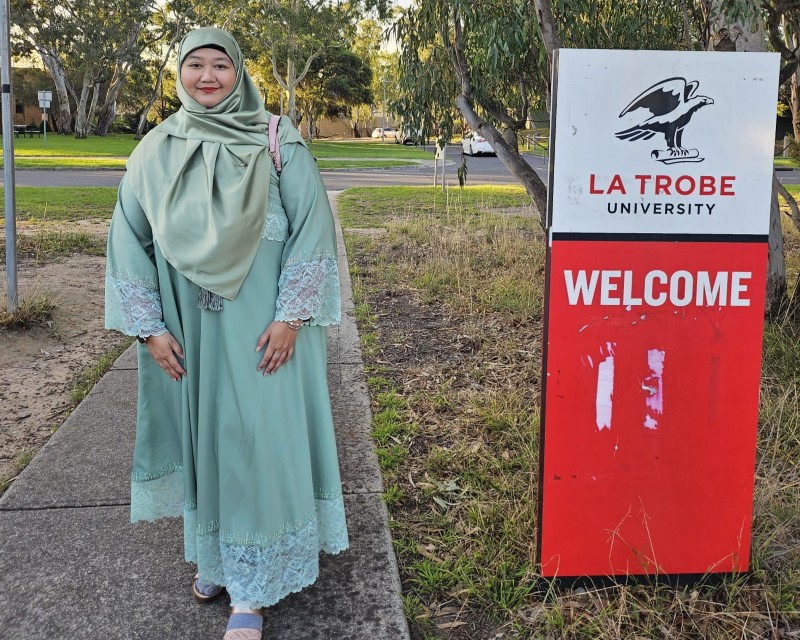
Today, Fatinah is pursuing a Master’s in Counselling, Rehabilitation and Mental Health at La Trobe University in Australia.
She received the High Achiever’s Scholarship and the Industry Placement Bursary, which allowed her to gain practical experience as a school counsellor in Melbourne.
Alongside her studies, she also works remotely as a mental health counsellor at Sacred Heartwork, supporting individuals who are seeking emotional support and guidance.
Her journey reflects a growing commitment to raising awareness about mental health and ensuring that support is accessible to those who need it.
Advice for Those Considering a Career Switch
Looking back, Fatinah did not expect her career to develop in this way.
Her journey moved from early childhood education to healthcare, and eventually into counselling.
For anyone considering a similar change, she shares a simple piece of advice:
“Have courage and take the leap of faith. I never expected my journey to lead here, but sometimes the path unfolds in ways you do not plan.”
Thinking About a Career Switch into Healthcare?
Fatinah’s story shows how one step into healthcare training can open new possibilities.
Many people begin their healthcare careers from different professional backgrounds. With the right training and guidance, it is possible to transition into roles that support patient care and rehabilitation.
Through the SkillsFuture Career Transition Programme (SCTP) at HMI Institute, learners gain practical healthcare skills and industry-recognised certification that prepare them for roles in the care sector.
Eligible learners may benefit from:
✅ Up to $3,000/month SkillsFuture Mid-Career Training Allowance for Singaporeans 40 years and above (T&Cs apply)
✅ $4,000 SkillsFuture Credits (Mid-Career) Top-up Claimable
✅ Up to 90% course fee subsidies for Singaporeans, PRs, and LTVP+ holders
✅ Structured learning and hands-on training
✅ Job placement support to help you secure employment in the Care Economy
Explore how the SCTP can support your transition into healthcare.